How I read books better with AI
Generative AI is everywhere now — from automating work tasks to becoming your personal tutor. The options for using AI keep expanding, and more importantly, they’re becoming increasingly personalized. That’s when it hit me: if AI can do all that, why not use it as my own personal reading assistant?
Chat with the author
This may sound strange, but you can use ChatGPT to talk to your favorite authors. Dostoevsky, Shakespeare, Dickens, Tolstoy, Kafka. This isn’t magic, it’s the power of statistics and patterns. Large language models (LLMs) have been trained on almost all public content available online, meaning when you ask about Jane Austen, it has probably read all of her works and what other people wrote about her.
However, you should know one key limitation of generative AI: while it has read almost everything, it retains only a hazy, generalized memory of texts — it generates answers from patterns, not exact recall. This is one reason you may sometimes see ChatGPT confidently produce incorrect facts, technically known as hallucinations.
To fix the problem of vague memory and reduce hallucinations when chatting about a book, you can send ChatGPT the chapter or excerpt of what you’re reading as a PDF, photo, or even plain text. That revives the LLM’s knowledge on that subject, producing better results.
You are Fyodor Dostoevsky. I’m reading Crime and Punishment. I’ll share a passage from Chapter 2. [Paste PDF or text here]. What advice would you give modern readers about understanding Raskolnikov?
The possibilities are endless. Not only can you “chat with the author,” but you can discuss ideas that broaden your knowledge and help you better understand the intentions of the text.
Create smart reading lists
I’ve always wanted to read Jonathan Edwards’s most intricate works — like Freedom of the Will and Religious Affections — but those aren’t the kind of books you just crack open on an afternoon. At least, I can’t. I know I need to lay the groundwork first if I want to truly grasp what the author meant.
GPT, suggest 10 books to read to get mentally and intellectually ready for Jonathan Edwards. Include a mix of subjects. Keep the list gradual from easy to deep, and briefly explain how each book helps.
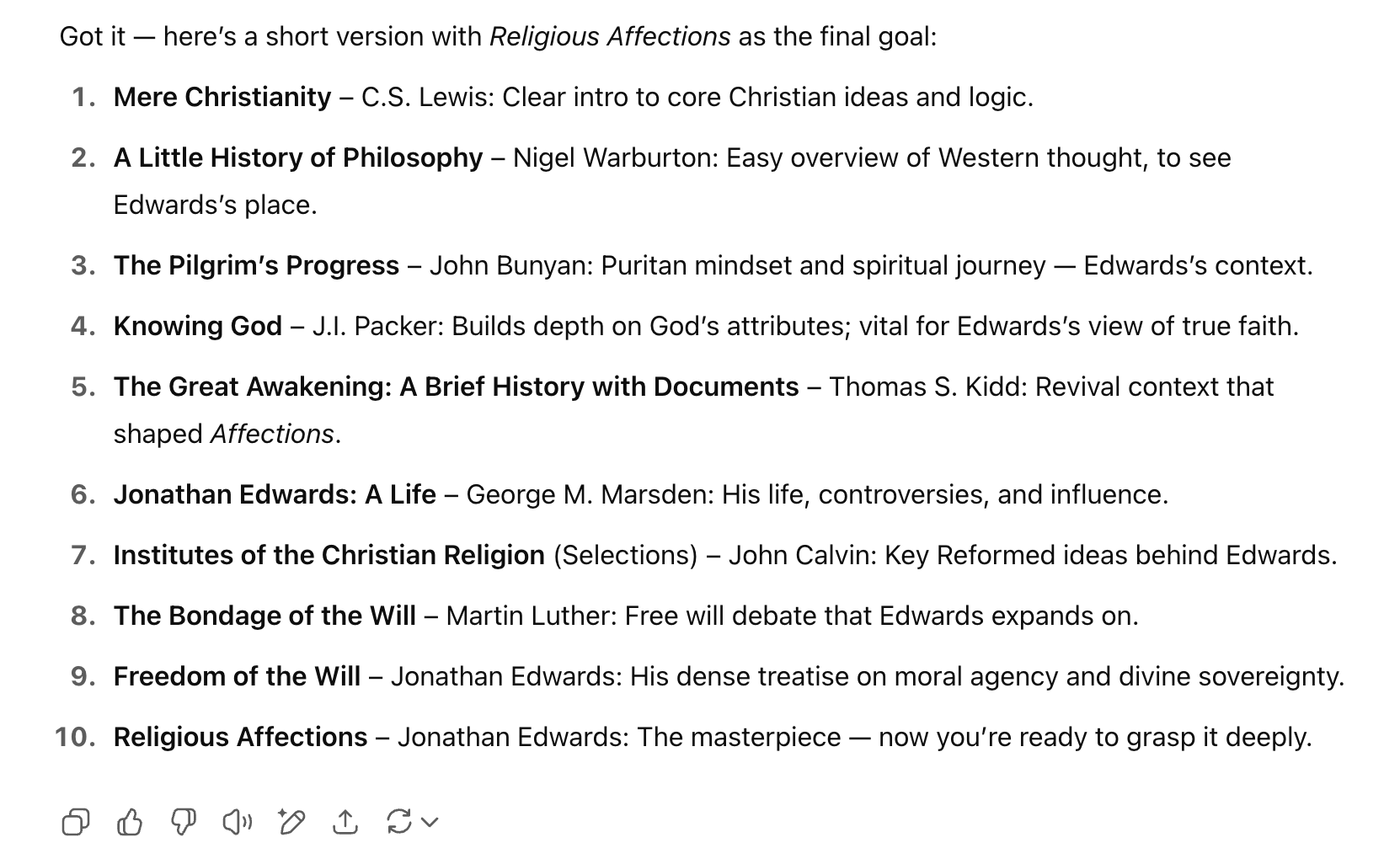
I’ve been using generative AI to prepare me for reading a particular author, topic, or book. You can change that prompt to your needs, or keep chatting with your assistant to make sure the list is tailored for your use.
Get essential context
I recently started reading Fyodor Dostoevsky’s Notes from Underground. Three pages in and I was like: what am I reading? I had no idea. Then I asked my AI buddy:
GPT, what should I know before reading Notes from Underground? I’ve just started reading it and I understand nothing.
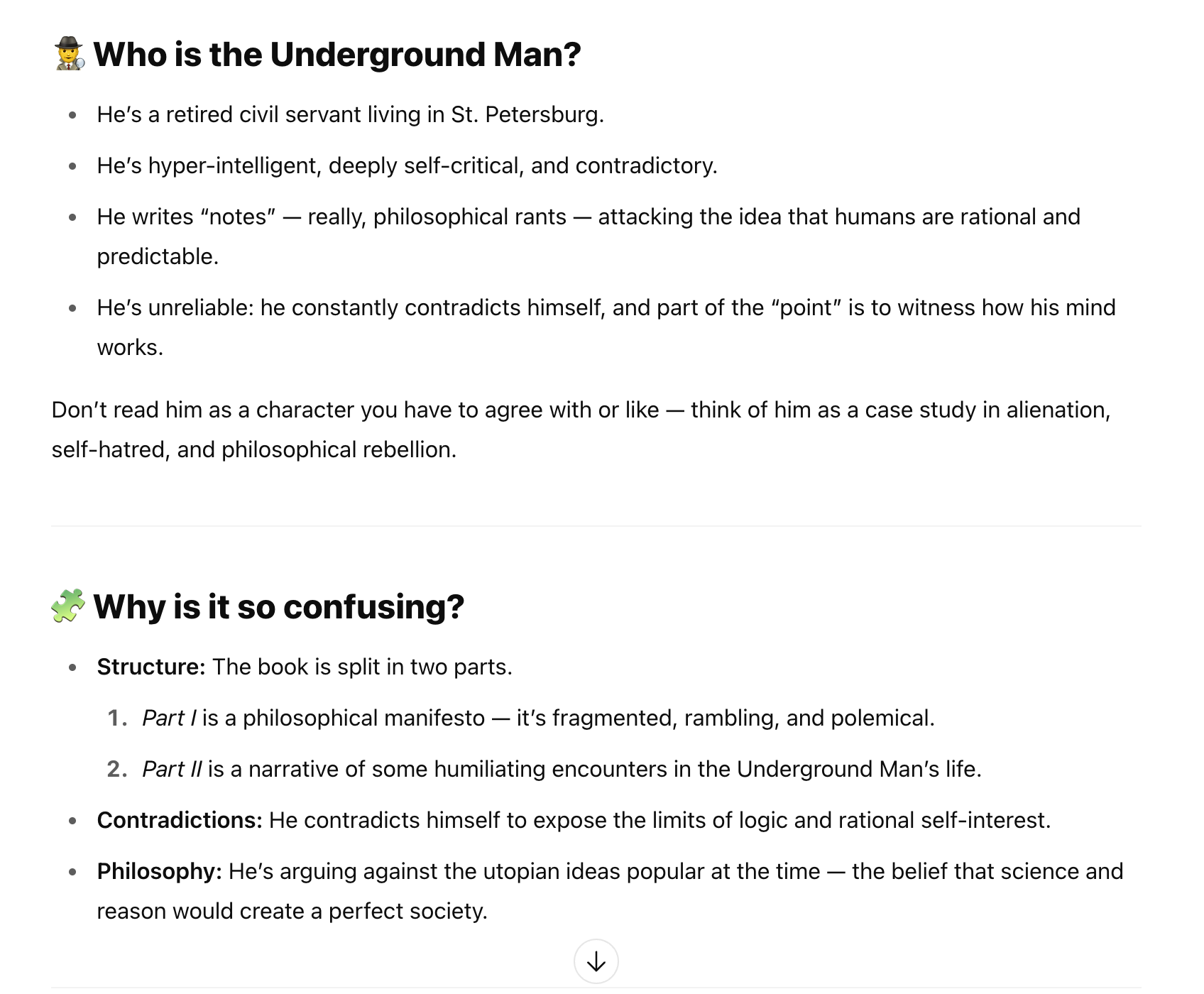
Generative AI gave me all the background that only Russians in the 1870s knew. This helped reduce my frustration and keep going with this wonderful read I would’ve given up on without AI.
How is generative AI helping you become a better reader? Get yourself out of the underground, and know your tools.